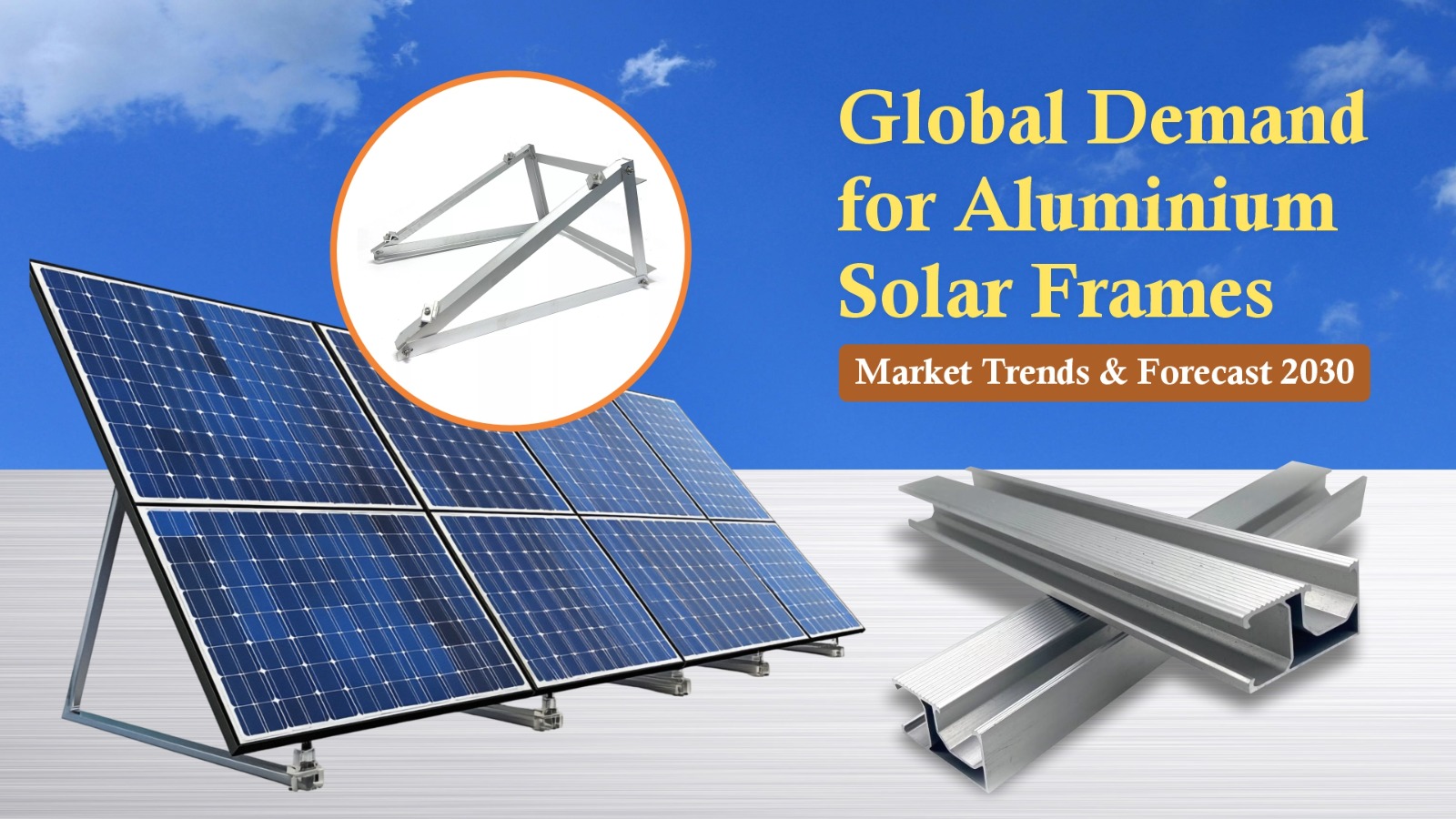
As the world shifts toward renewable energy, solar power is becoming increasingly significant. From urban rooftops to expansive solar parks, photovoltaic (PV) systems are being installed at record rates. At the core of every panel is a vital but often overlooked part: the aluminium solar frame.
Known for being lightweight, resistant to corrosion, and recyclable, aluminium has become the preferred material for mounting solar panels. As we head toward 2030, the demand for aluminium solar frames is expected to increase significantly, fueled by government support, global clean energy goals, and advancements in solar infrastructure.
Market Snapshot: Where We Are Today
According to the International Energy Agency (IEA), global solar PV capacity is set to rise from 1,200 GW in 2022 to over 5,000 GW by 2030. With aluminium making up nearly 85% of the solar frame market, its importance in the solar value chain is clear.
By 2024, the global aluminium solar frame market is estimated to be worth about USD 12.3 billion, with a projected growth rate of 7.5% annually through 2030. Regions like Asia-Pacific, especially India and China, lead in production and installations, while North America and Europe are quickly catching up due to updated climate policies and infrastructure investments.
Why the Surge in Demand? Key Market Drivers
Here are the four main factors driving this growth:
1. Policy Push: Incentives and Subsidies
Governments worldwide are encouraging solar adoption through subsidies, tax credits, and net metering programs. These measures make solar energy more affordable and boost demand for high-quality aluminium frames that ensure long-term system performance.
2. Rise in Rooftop Solar Installations
Cities are rapidly adopting solar energy. Rooftop installations, particularly in residential and commercial sectors, require custom-sized and visually appealing aluminium frames that can withstand urban environmental conditions.
3. Tech Advancements in Frame Design
Improvements in aluminium extrusion and surface treatment technologies have resulted in frames that are more durable, lightweight, and easy to assemble. Features such as pre-punched holes, anodized finishes, and snap-fit modular designs are establishing new standards for ease and longevity.
4. Sustainable Construction Trends
With green certifications like LEED and IGBC gaining traction, architects and builders are choosing aluminium solar frames for their low carbon footprint and complete recyclability, which supports eco-friendly infrastructure.
Inside the Factory: A Manufacturer’s Perspective
At INEX, one of India’s top aluminium solar frame manufacturers, the demand shift is evident. There's a growing need for:
• Precision-engineered frame sections
• 6063-T5 and 6061-T6 aluminium alloys
• High UV and corrosion resistance
• Anodized or powder-coated finishes for added durability
• Lightweight yet strong profiles
Whether for large solar farms or small rooftop systems, manufacturers like INEX are emphasizing customization, consistency, and speed. The trend toward modular and pre-assembled framing kits is helping to reduce installation time and labor costs, a key advantage in today’s fast-moving renewable sector.
Not All Sunshine: Market Challenges Ahead
Despite a promising growth forecast, the aluminium solar frame market faces some challenges:
• Raw Material Price Volatility: Prices for aluminium ingots can vary due to geopolitical issues, energy costs, and supply chain disruptions.
• Environmental Compliance: Waste management during anodizing processes is under scrutiny, pushing manufacturers to adopt cleaner practices.
• Competition from Polymer Alternatives: In certain cases, polymer-based frames provide a cost-effective alternative, although often with lower durability.
• Logistics and Trade Barriers: Global trade dynamics, import/export taxes, and shipping delays can affect distribution.
Looking Ahead: Forecast 2030
By 2030, the aluminium solar frame market is likely to exceed USD 20 billion, driven by:
• Large utility-scale projects
• Growth in smart cities and integrated energy grids
• Increasing demand from emerging markets, especially in the Middle East and Africa
To remain competitive, manufacturers must comply with global standards like ISO 9001, ISO 14001, and RoHS, while investing in automation, research and development, and digital integration. There is also a stronger focus on environmental sustainability, including recyclable materials, energy-efficient manufacturing, and circular economy models.
Conclusion: The Future Is Framed in Aluminium
In the broader context of clean energy, aluminium solar frames are essential, even if they go unnoticed. As we approach 2030, their significance will grow. With the right combination of innovation, scalability, and sustainability, aluminium frame manufacturers can seize the opportunity to lead the way toward a cleaner, brighter future.